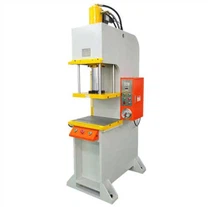
Parametrii de bază ai presei hidraulice
Parametrii de bază sunt datele tehnice de bază ale presei hidraulice, care sunt determinate în funcție de utilizarea tehnologică și tipul de structură al presei hidraulice. Reflectă capacitatea de lucru și caracteristicile presei hidraulice și, de asemenea, determină practic dimensiunea și greutatea brută totală a presei hidraulice. Parametrii de bază sunt selectați de utilizator. Principala bază pentru achiziție. Deci care sunt parametrii de bază ai presei hidraulice? Cum să înțelegeți și să alegeți parametrii presei hidraulice? Astăzi, voi rezolva pentru dvs. parametrii de bază ai presei hidraulice cu trei-grinzi și patru-coloane.
1. Forța nominală (KN)
The nominal force is generally the main parameter of the hydraulic press, which reflects the working capacity of the hydraulic press. The nominal force is the maximum working pressure that the hydraulic press can nominally issue, and is numerically equal to the product of the maximum liquid pressure and the total area of the working plunger (piston radius) R²πpressure gauge value (system pressure)
Note: 1MPa≈100N
Take 60T calculation as an example: cylinder diameter φ180mm system pressure 25MPa (for high pressure)
90903.1425÷10000 (unit conversion)
2. Înălțime maximă pentru cap (înălțimea deschiderii)
The maximum clearance distance refers to the distance from the upper surface of the table to the lower surface of the movable beam when the movable beam stops at the upper limit position. The maximum clearance distance reflects the size of the working space of the hydraulic press in the height direction. It should be determined by process factors such as the height of the mold and the corresponding backing plate, the size of the working stroke, and the size of the space required for placing the blank and taking out the workpiece. The maximum clearance has a great influence on the overall height of the hydraulic press, the length of the column, the stability of the hydraulic press body and the height of the installation workshop. The maximum clearance distance of the single-arm hydraulic press is the distance from the lower plane of the indenter to the upper surface of the table.
3. Cursa maxima
The maximum stroke refers to the distance from the lower plane of the column guide sleeve of the movable beam to the upper plane of the column travel limit sleeve when the movable beam is at the upper limit position, that is, the maximum distance that the movable beam can move. The maximum stroke should be determined according to the required maximum working stroke during the workpiece forming process.
4. Mărimea mesei (lungime lățime)
The workbench is generally the place where the mold is placed. The size of the worktable refers to the effective size that can be used on the worktable, and the size of the worktable depends on the plane size of the mold and the arrangement of the process.
5. Adâncimea gâtului (presa hidraulică cu o singură-coloană)
Refers to the distance from the center of the single-column hydraulic press head to the inner surface of the frame.
6. Forța de întoarcere
The return force refers to the weight of the movable part, the force required for the return process (such as the draft force, the lifting force of the chopping knife), etc.
7. Viteza de mișcare a fasciculului mobil (viteza glisorului): poate fi împărțită în viteza cursei de lucru, viteza cursei în gol (cursa de umplere cu lichid) și viteza cursei de întoarcere.
The idle travel and return travel can generally be higher to improve productivity, but too fast will cause shock and vibration when stopping or reversing.
Există trei tipuri de viteză:
⑴Constant speed (eternal speed): rising speed, falling speed (using electro-hydraulic reversing valve)
⑵Differential: ①Fast down, slow back ②Slow down, fast back, idle descending, pressing, and returning (with cartridge valve) ③Up and down equal velocity
(3) Rapid (sistem de umplere cu lichid): este, de asemenea, echipat în mod deliberat cu un cilindru-de creștere a vitezei, în loc să se bazeze pe propria greutate pentru a scădea;
8. Forța nominală de evacuare și cursa de evacuare
The function of the ejector cylinder is to eject or stretch, and the power and stroke safety of the ejector are determined by the process requirements;
9. Presa hidraulică Y27 cu o singură acțiune -întindere a foii trebuie să cunoască și parametrii forței plăcuței hidraulice și cursei plăcuței hidraulice.
10. Presa hidraulică de desenare cu dublă -foaie de acțiune Y28 trebuie, de asemenea, să cunoască parametrii forței de tragere, forța suportului semifabricatului, cursa glisorului de desen, cursa suportului semifabricatului, înălțimea deschiderii cursorul de desen și înălțimea de deschidere a suportului gol.
11. Indiferent dacă presa hidraulică cu o singură-coloană este de tip mandrina sau o structură de glisare superioară (tip placă de presare), dacă este necesară corectarea mesei de lucru etc.
12. Secvența de acțiune (proces de acțiune) Clientul furnizează secvența procesului de presare și cerințele procesului (cerințele procesului).